How DoorDash Ads balances advertiser needs with the consumer experience
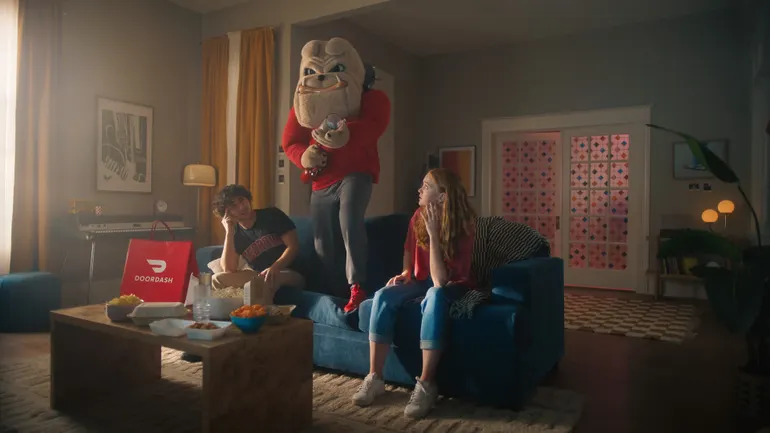
DoorDash Ads is upping its bid to advertisers with a new suite of solutions for consumer packaged goods (CPG) brands and enterprise restaurants, including expanded ad products and enhanced measurement tools. The offerings, unveiled during Advertising Week New York, are meant to help brands drive reach and are a signal of how the platform is attempting to provide greater transparency into ad performance.
The platform unveiled enhanced measurement tools for enterprise restaurants, including a new measurement standard for Sponsored Listings called Ghost Ads that guarantees advertisers’ tests only include customers who actually saw an ad — or would have — to deliver a more accurate read on performance. In eight recent tests, Ghost Ads reduced measurement noise by over 90%, according to release details.
DoorDash also revealed new reporting in Ads Manager that offers advertisers a single view of ads and performance with metrics including average order value, orders and total sales.The platform also debuted new reporting and discovery tools for CPG brands, including the integration of Sponsored Products across all categories of global search in the U.S. and internationally, a move that could help brands reach more high-intent audiences.
Additionally, category-level share reporting powered by Circana is designed to offer advertisers a clear view of how they perform compared to competitors on DoorDash. Together, the suite of new solutions are designed to fill gaps for advertisers while still prioritizing the consumer experience, said Peter Giordano, general manager of DoorDash Ads’ platform and growth services.
“The throughline for us is constantly, what are we hearing from our advertisers for a need that we can solve, and how can we make sure that the need also simultaneously delivers an incremental consumer value,” Giordano said.
Marketing Dive met with Giordano at Advertising Week New York to discuss DoorDash’s latest ad products, the future of the platform and the state of retail media networks broadly.
The following interview has been edited for clarity and brevity.
MARKETING DIVE: What is the ultimate goal behind DoorDash’s latest ad products?
PETER GIORDANO: The goal — every goal we have — is rooted in a merchant problem that we can solve and then a consumer need that we can deliver. So if you think about some of the new things we released, for example, ads in global search: [there’s a] critical advertiser need to show up no matter where customers are starting their journey whether it be global search, whether it be actually in a store page, we want to make sure that brands have the opportunity to engage with our customers whenever and wherever that discovery journey starts.
Can you expand on how you wed together advertisers’ needs with an optimal consumer experience?
We are a maniacally consumer-first company. Protecting the consumer experience is something we take very seriously. For example, one decision we made as an ads business was for our main restaurant ads product, which is called Sponsored Listings, for restaurants to advertise in the DoorDash app — we only charge them if it leads to an order. They don’t pay for impressions, they don’t pay for clicks. They only pay for an order.
That’s really advertiser friendly because it derisks the proposition for them, but it also makes a much better consumer experience, because we have every incentive to make sure the best and most relevant ad is being served to you, because if you don’t think it’s relevant and you don’t act on it, the ads business makes no money. That decision holds us accountable to also delivering the best, relevant experience for consumers.
Standardization continues to be a chief complaint against retail media networks. How are you helping address that?
We have three different customer segments: enterprise restaurants, CPG brands and then our SMB restaurants — kind of the single location, mom and pops. All three of those customer segments have different needs, different levels of sophistication, different ad products that are relevant to them. As a result, we have three different entry points. We have a different ads manager for each of those segments, because it would be super overwhelming for a SMB restaurant to log into an ads manager that has all the bells and whistles that McDonald’s needs and vice versa.
All of our releases and everything we do is through one single serve ads manager that is relevant to that audience. So category share reporting is available in the same ads manager where they can launch ads in global search, for example, and where they can leverage our AI products and insights to make their next campaign better. We’re just trying to make sure that we have a single entry point for all of our advertisers that’s very hyper relevant to them, and as much as we can, takes the guesswork out of the equation.
DoorDash recently acquired Symbiosys. How is that partnership going so far?
For the better part of close to two years, we were working with them just as a partner — it was almost to the point that I sort of forgot they weren’t employees because they were just great partners of ours. So in that sense, it was a very natural and seamless integration from a people and culture perspective because we’ve been working with them so closely as one of their first large customers, and then we’ve done a lot of work over the past couple of months to integrate their team in with the broader DoorDash Ads team.
I think two exciting things have come from it. One, we are working so closely and in lockstep with them to continue to build our offsite ads business — we’re not only for CPG brands, but now an offering for SMB restaurants that they’ve been building a product for us that’s bespoke for SMB restaurants.
Separately, they are still working with other retailers as their customers. This acquisition did not mean that they can’t work with other retailers as well because that’s their core platform, and a lot of those retailers that they’re working with are also retailers on the DoorDash marketplace. There’s a lot of opportunity for synergy now with Symbiosys working with those retailers, us working with those retailers, and then collectively figuring out how can we all make each other better.
When we think about offsite retail media, what are the pain points? Where does it need to go?
One really exciting area where offsite can continue to go is to be more of a creative storytelling vehicle for retail media. In the early days of retail media, it was sponsored search ads, and it was a highly effective conversion tactic, but a brand couldn’t exactly tell their story through that media. Now, with offsite, brands can be across search, social, programmatic, online video, CTV, there’s so many places that they can tell their story powered by a retailer’s first-party data.
One of the challenges is just making sure we can accurately connect the dots from a measurement perspective across all of these disparate channels — no one has the solution to that today. We’re all working on it. I think the entire industry is sort of sharing learnings of how we can match data, how we can follow a path to purchase, how we can understand what different points along that path to purchase maybe tipped the scales. We’re not there yet, but we need to get there because brands want to understand what was truly top-of-the-funnel awareness, what started moving someone mid-funnel, what actually got them over the line.
Where is DoorDash Ads headed longterm?
DoorDash and Wolt and Deliveroo are all one company across 40 countries. So one, where we’re going is to be a truly global ads business, unify our offerings, work collectively across our teams and bring DoorDash Ads to 40 countries. So that is a huge exciting path for us now that not only is Wolt Ads up and running but the Deliveroo acquisition went through.
Secondly, we’re leveraging a lot of opportunities with AI to personalize the experience for our consumers, and by definition, provide better outcomes for our advertisers. The more we can use technology and AI to take the guesswork out of the equation for our advertisers and just let us sort of optimize across ads and promotions, across on-site ads and offsite ads across different ad types, different promotion constructs, based on what we think different customer segments will be most receptive to, that’s something that’s really exciting.
[That’s] where we see the future of DoorDash ads going: leveraging our technology and AI through what we’re calling Smart Campaigns to make sure that we are truly automating and intelligently serving ads to the right customer at the right time.
link